Sagrada Familia Facts: History & Construction Timeline
Quick answer
Construction began in 1882, and the most interesting facts about la sagrada familia are that it remains unfinished more than 140 years later, that it has been a UNESCO World Heritage Site since 2005, and that it is funded entirely by ticket sales and donations rather than government money.
Interesting facts about la sagrada familia start with a number most first time visitors find hard to believe: construction began in 1882 and the basilica is still not finished. What looks like a single dramatic building is actually a 140 year long project, layered with symbolism, funded entirely by visitors, and shaped by more than one architect’s vision. Here is what actually makes the history behind it worth knowing before you go.
Who Originally Commissioned the Building?
A religious organization called the Spiritual Association of Devotees of Saint Joseph commissioned the original design in the late 1870s, intending a modest neighborhood church rather than the monumental landmark it eventually became. Gaudi’s arrival in 1883 transformed the scope and ambition of the project far beyond what the original commission ever anticipated.
When Did Construction on Sagrada Familia Begin?
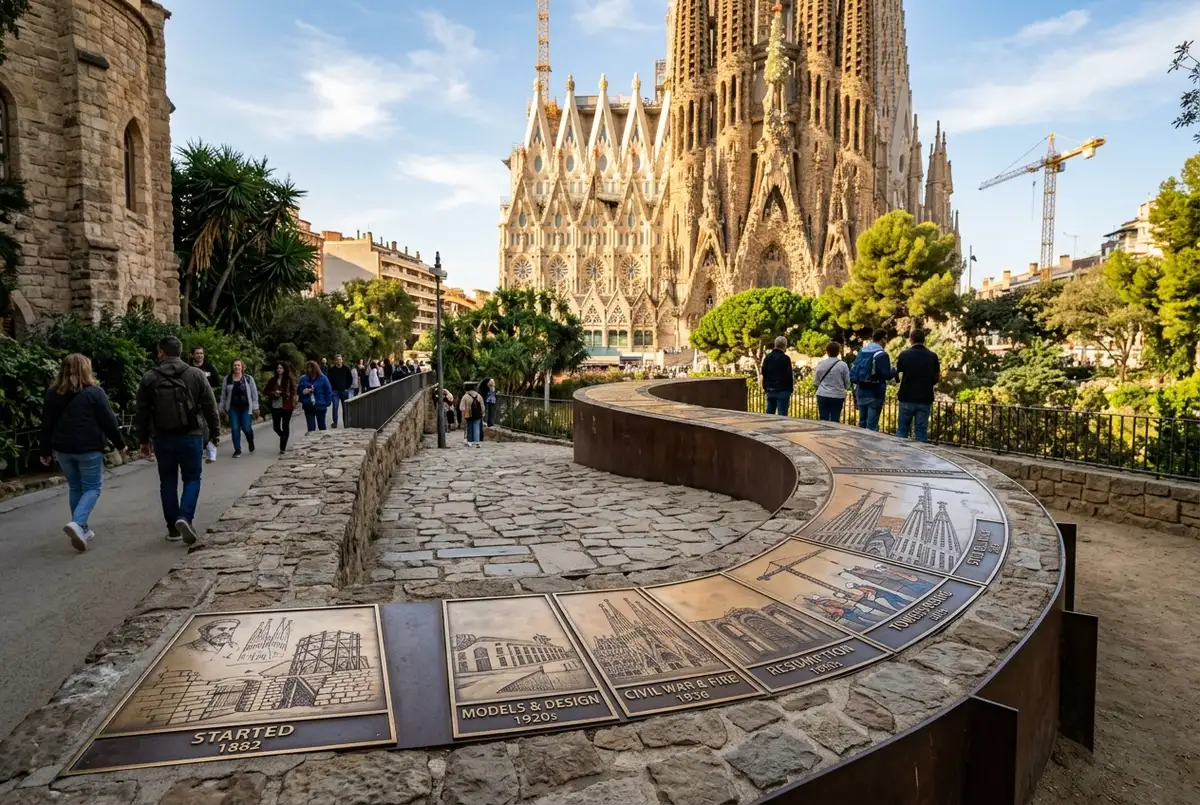
Construction started on March 19, 1882, under the original architect Francisco de Paula del Villar, who planned a much more conventional Gothic revival church. Antoni Gaudi took over the project in 1883, barely a year in, and reshaped the design so completely that almost nothing of the original neo-Gothic plan survived his changes.
Why Is the Sagrada Familia Important?
Why is the sagrada familia important comes down to three things: it represents one of the most ambitious privately funded construction projects in modern history, it showcases Gaudi’s naturalist architectural style found almost nowhere else at this scale, and it functions as both an active place of worship and a UNESCO recognized cultural landmark. Few buildings anywhere combine religious, architectural, and civic significance this fully.
How Long Has Sagrada Familia Been Under Construction?
Sagrada familia how long to build is one of the most searched questions about the basilica, and the honest answer is over 140 years and counting. Gaudi himself reportedly expected the project to take generations, once remarking that his client, meaning God, was in no hurry. Funding gaps, the Spanish Civil War, and more recently pandemic related revenue losses have all slowed progress at different points.
What Makes Sagrada Familia’s Architecture So Distinct?
Sagrada familia features that set it apart from traditional cathedrals include tree like branching columns that hold up the ceiling without traditional buttresses, hyperboloid ceiling vaults inspired by natural forms, and stained glass windows designed to flood the interior with color rather than the muted light typical of Gothic churches. Our what to expect inside guide previews exactly what these features look like once you are standing beneath them.
Was the Sagrada Familia Damaged During the Spanish Civil War?
Yes. In 1936, anarchist groups set fire to Gaudi’s crypt and workshop, destroying many of his original models, plans, and photographs. Architects and craftsmen spent decades afterward painstakingly reconstructing his intentions from surviving fragments, which is part of why later sections of the building took so long to design accurately.
Is Sagrada Familia a Cathedral or a Basilica?
Technically neither in the strict sense, though it is commonly called both. It is officially a basilica, a title granted by Pope Benedict XVI in 2010 during his consecration visit, rather than a cathedral, which specifically means the seat of a bishop. Barcelona’s actual cathedral is a separate, older building in the Gothic Quarter.
How Is Construction Funded Without Government Money?
The single most surprising fact for most visitors is that Sagrada Familia has never accepted government funding. Every phase of construction, from Gaudi’s earliest work through today, has been paid for entirely through ticket sales and private donations. This is part of why the price of your la sagrada familia ticket goes directly toward finishing the building rather than simply covering admission.
What Is the Sagrada Familia’s UNESCO Status?
Parts of the Sagrada Familia, specifically the Nativity facade and the crypt, were added to the UNESCO World Heritage List in 2005 as part of a broader listing covering several of Gaudi’s works in and around Barcelona. UNESCO recognized the building for its exceptional contribution to architecture and design during the late nineteenth and early twentieth centuries.
How Many Towers Will the Finished Building Have?
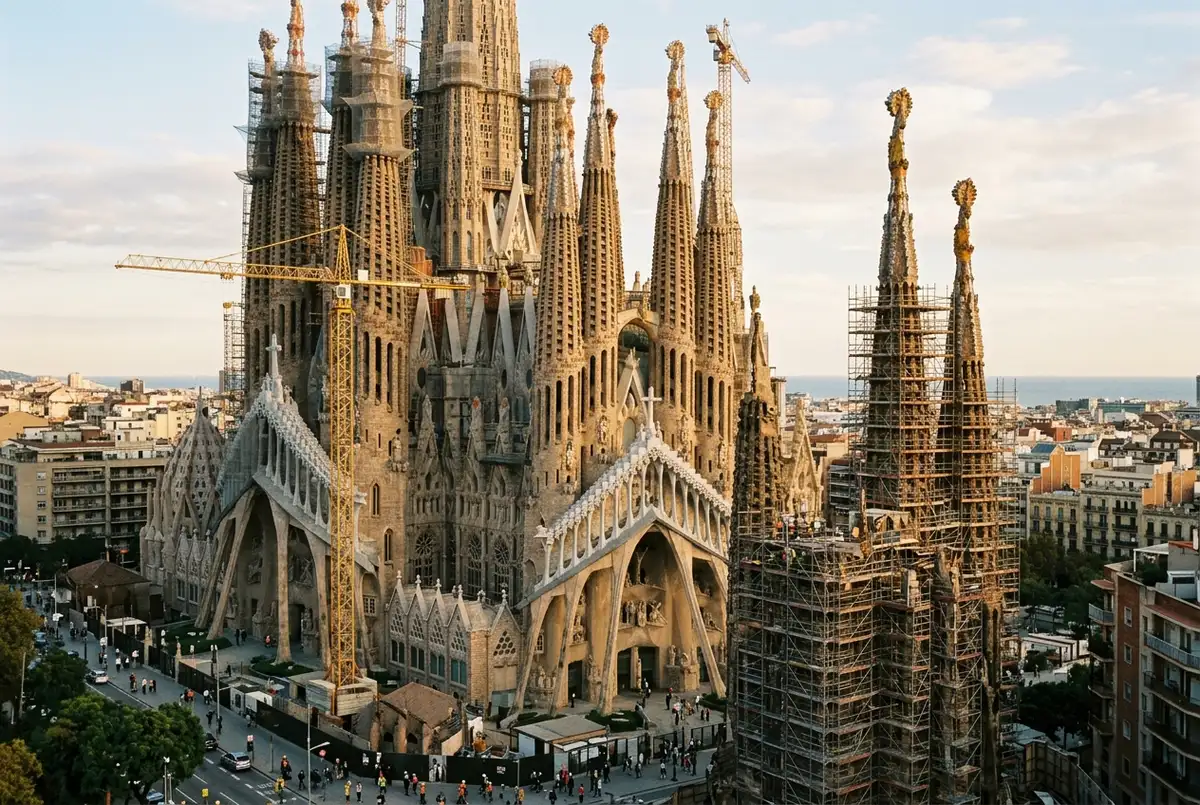
The completed design calls for eighteen spires: twelve for the Apostles, four for the Evangelists, one for the Virgin Mary, and the tallest at the center for Jesus Christ, each one carrying its own symbolic meaning. Once the central tower is finished, Sagrada Familia will become the tallest church building in the world.
Why Do the Facades Look So Different From Each Other?
The Nativity facade, the oldest and most ornate, overflows with carved plants, animals, and joyful scenes celebrating Christ’s birth, largely completed under Gaudi’s own direct supervision. The Passion facade, built later using his surviving models, is deliberately stark and angular, meant to evoke suffering rather than celebration. The contrast between the two is one of the clearest ways to see how the building’s symbolism shifts from one side to the other.
How Many Visitors Does Sagrada Familia Welcome Each Year?
Sagrada Familia consistently ranks among the most visited landmarks in Spain, drawing several million visitors annually in a typical year, more than most European cathedrals despite still being under construction. This visitor volume is exactly what funds ongoing construction, since the building has never relied on government money.
What Does the Name Sagrada Familia Actually Mean?
The full name, Basilica de la Sagrada Familia, translates from Catalan and Spanish as Basilica of the Holy Family, referring to Jesus, Mary, and Joseph. Gaudi chose to dedicate the building to this specific theme early in his redesign, which is why so much of the exterior carving focuses on family, birth, and everyday domestic scenes alongside the more traditional religious imagery.
Did Gaudi Know He Would Not Live to See It Finished?
Yes. Gaudi devoted the final years of his life almost entirely to the project, moving into a small workshop on site and reportedly telling colleagues that he expected to leave the work to those who came after him. He died in 1926 after being struck by a tram, having completed less than a quarter of the building himself, yet his physical and plaster models continue to guide construction today.
When Is Sagrada Familia Expected to Be Finished?
Estimates have shifted more than once over the decades as funding, engineering complexity, and events like the pandemic have affected the pace of work. Our Sagrada Familia completion date guide covers the current construction targets and what sections remain unfinished in more detail.
Why Do People Say the History Makes the Visit More Meaningful?
Knowing the building’s backstory changes how most visitors experience the interior. Recognizing that you are looking at more than a century of continuous, privately funded work, rather than a monument completed in one era, adds weight to details that might otherwise pass unnoticed. Our Antoni Gaudi architect guide covers the man behind the design in more depth, useful background if this history has you curious about his broader body of work.
Can You Watch the Ongoing Construction Yourself?
To an extent, yes, even without traveling to Barcelona. Our Sagrada Familia live webcam guide covers where to watch construction progress remotely, a genuinely novel way to follow a project that has been building for well over a century.
Is the History Enough Reason to Visit on Its Own?
For many travelers, yes. Our full is Sagrada Familia worth it review weighs the history against cost, crowds, and what past visitors actually say, useful if the facts here have you leaning toward booking a visit.
Once the history has you convinced, lock in your sagrada familia ticket prices and a specific time slot ahead of your trip, since popular hours fill up quickly, especially in peak season.
For verified details on the ongoing construction and current visitor information, the official Sagrada Familia website remains the most reliable source to check before you travel.
Frequently Asked Questions
What year did construction start on the Sagrada Familia?
Construction began in 1882 under the original architect Francisco de Paula del Villar, with Antoni Gaudi taking over the design a year later in 1883.
Why has the Sagrada Familia taken so long to build?
Funding gaps, the destruction of Gaudi’s original models during the Spanish Civil War, engineering complexity, and more recent pandemic related revenue losses have all slowed construction at different points over more than 140 years.
Is the Sagrada Familia funded by the government?
No. Construction has always been funded entirely through ticket sales and private donations, never through government money.
Is the Sagrada Familia a UNESCO World Heritage Site?
Parts of it are. The Nativity facade and crypt were added to the UNESCO World Heritage List in 2005 as part of a wider listing covering several of Gaudi’s works.
How many towers will the Sagrada Familia have when finished?
Eighteen in total: twelve for the Apostles, four for the Evangelists, one for the Virgin Mary, and the tallest central tower for Jesus Christ.
Ready to visit?
Book your tickets in advance: popular time slots sell out.