A la Sagrada Familia ticket is your way into the tallest, strangest, most unfinished church Antoni Gaudí ever dreamed up, and the ticket you pick decides how much of it you actually see. Some tickets cover the basilica floor and museum only, others add tower access, a live guide, or a full day trip out to nearby Gaudí landmarks. Across the eight tours compared on this page, prices run from about €11 for a facade-focused entry to €199 for a private architect-led tour, so the right choice depends on your budget, your schedule in Barcelona, and how deep you want to go into the story behind the Nativity and Passion facades.
What Is the Sagrada Familia and Why Do You Need a Ticket?
The Sagrada Familia is Antoni Gaudí’s unfinished basilica in Barcelona, under construction since 1882 and still not complete. A ticket is required for every visitor over a set age, because the site controls crowding with timed-entry slots rather than a first-come queue.
Gaudí took over the project in 1883 and spent the rest of his life on it, leaving detailed models and drawings for the parts he never saw built. The basilica became a UNESCO World Heritage Site in 2005 and is still funded largely through ticket sales, which is part of why timed tickets matter here more than at most churches: they pay for the ongoing construction. You can read more about the building’s history on Wikipedia or check current visitor rules on the official Sagrada Familia website.
Because entry is capped, tickets are date and time specific. Turning up without one usually means being turned away, especially from spring through early autumn when demand is highest.
How Much Does a Sagrada Familia Ticket Cost?
Sagrada Familia ticket prices depend on what the ticket includes. Entry-only or facade-focused tickets start around €11 to €34, a standard guided tour with skip-the-line entry runs about €55, tower access adds it to roughly €72, and private or combo tours that pair the basilica with Park Güell, Casa Batlló or Montserrat reach €90 to €199.
The gap between the cheapest and priciest options mostly comes down to three things: whether a live guide walks with you, whether the towers are included, and whether a second site is bundled in. Group size matters too, since private and small-group tours cost more per person than a shared departure. For a full breakdown by ticket type, see our Sagrada Familia ticket prices guide, which lists the exact tiers side by side. Prices above reflect rates seen at time of writing and can shift with season and demand, so always confirm the total at checkout before paying.
Which Sagrada Familia Ticket Should You Buy?
Most first-time visitors do best with a standard skip-the-line guided tour, since it covers the interior, the museum, and Gaudí’s design story without requiring a big time or money commitment. Travelers who want to move at their own pace but still get context usually prefer an audio-guide ticket instead.
If you are still deciding between formats, our guide to choosing the right Sagrada Familia ticket walks through entry-only, guided, audio-guide and tower options side by side, including the “with or without towers” question that trips up a lot of planners. For a closer look at guided versus self-paced audio touring specifically, the guided tour vs audio guide comparison breaks down what each format actually adds, from live Q&A with a guide to the freedom to linger over one stained-glass window as long as you like.
Families with young kids, visitors with limited mobility, and anyone short on time generally get more value from entry-only or guided tickets than from adding the towers, simply because the tower climb takes extra time and stairs.
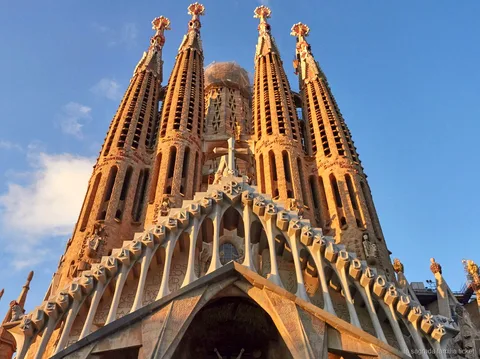
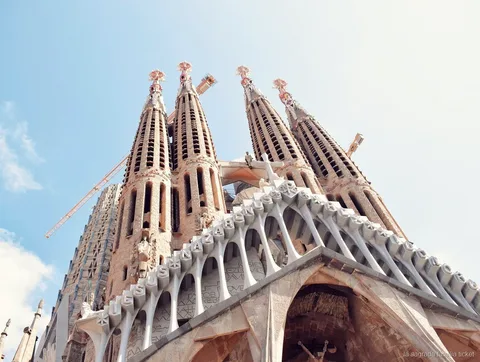
Tower tickets add rooftop-level views over Barcelona and a close-up look at the spires, mosaics and bell openings that you cannot see from the nave floor. The trade-off is a narrow, one-way climb: a lift takes you up, but the way down is a tight spiral staircase with no elevator.
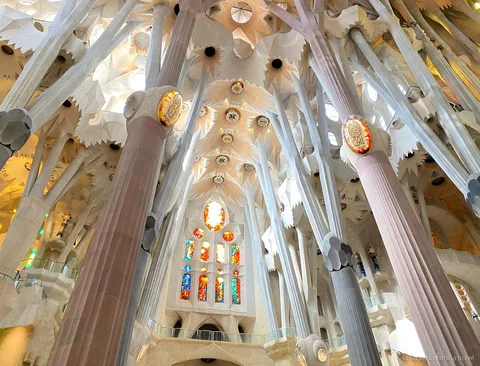
If heights, small spaces or a lot of stairs are a concern, the ground-floor and museum visit alone still delivers the full interior experience, including the famous forest of columns and the light streaming through the stained glass. Our dedicated Sagrada Familia tower tickets guide covers availability, booking lead time and which facade tower tends to have shorter queues, so you can decide before adding it to your basket.
How Do You Book Sagrada Familia Tickets and Skip the Line?
You can book directly through the official Sagrada Familia site or through an established travel platform, and both routes include timed, skip-the-line entry. The difference is mainly in flexibility: official tickets are sold strictly by the basilica, while third-party platforms often bundle a live guide, offer free cancellation, and hold back their own allocation of slots when the official calendar shows sold out.
Whichever route you choose, book with enough lead time. Peak months and weekends move fast, and popular time slots, especially first thing in the morning, disappear first. Our where to buy Sagrada Familia tickets guide compares the official site against third-party sellers in detail, including what happens if you need to change your date afterward.
Best Time of Year to Visit Sagrada Familia
Spring (April to June) and early autumn (September to October) bring milder weather and slightly thinner crowds than the height of summer. July and August are Barcelona’s busiest tourist months, so tickets for those weeks should be booked well ahead.
Winter offers the calmest visit overall, with shorter lines even at popular time slots, though days are shorter and some outdoor viewing spots feel less inviting in the cold. For a month-by-month breakdown, including weather and typical crowd levels, see our opening hours and best time to visit page. The Barcelona Turisme site is also a useful source for citywide events that can affect crowds around major attractions.
Getting to Sagrada Familia
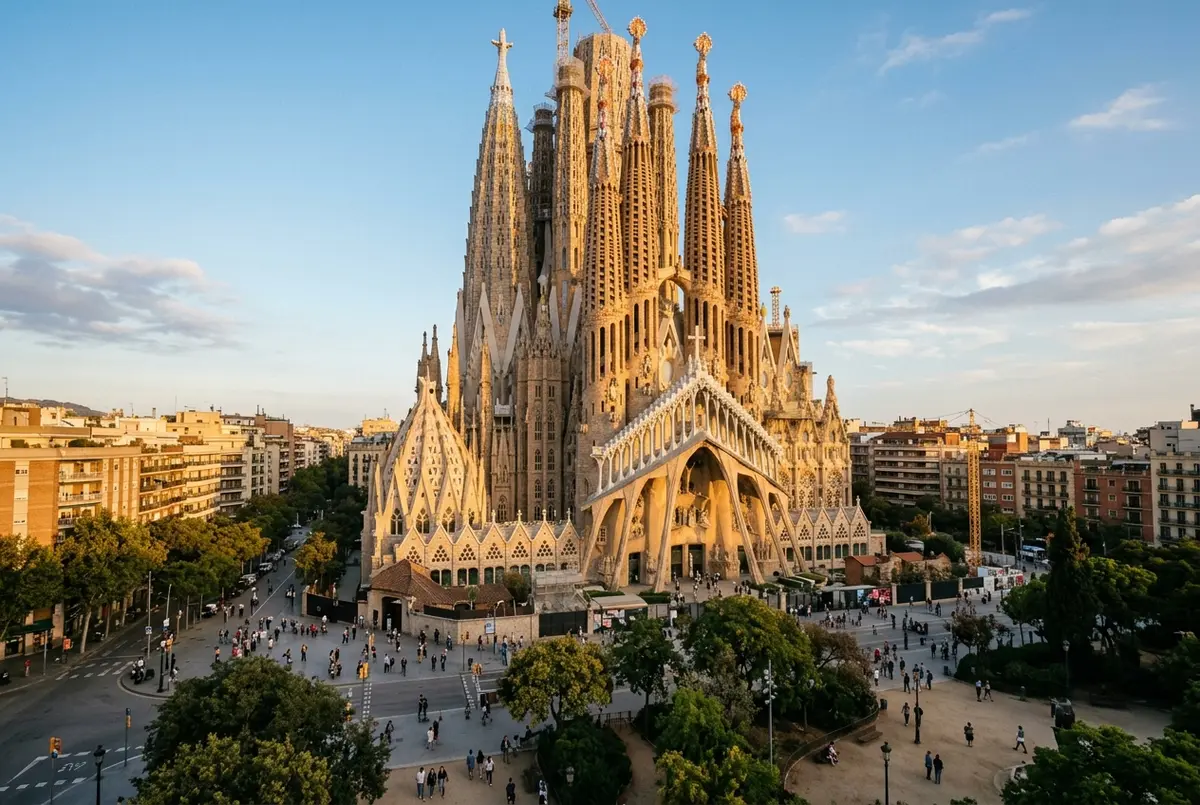
The basilica sits in the Eixample district and is easy to reach by metro: the Sagrada Familia stop on lines L2 and L5 opens directly onto the plaza outside. Several bus routes also stop nearby, and it is a walkable 20 to 30 minutes from many central Eixample hotels.
Driving is rarely worth it. Street parking near the basilica is scarce and expensive, and the surrounding streets get congested during peak visiting hours. If you are combining the visit with other Gaudí sites, the metro connects easily to both Park Güell and Casa Batlló without needing a car at all.
What Should You Expect Inside?
Expect scale first: the nave rises higher than most cathedrals in Europe, supported by tree-like columns that branch into a stone canopy overhead. Stained glass on the Nativity side glows in warm oranges and yellows in the morning, while the Passion side runs cooler blues in the afternoon.
The basilica is still an active construction site in places, with scaffolding visible around unfinished towers, which is part of the appeal rather than a flaw. Most guided and audio-guide tickets end at the on-site museum, where models and old photographs show how the design has evolved since 1882 and what is still planned for the remaining towers.
Is a Sagrada Familia Ticket Worth It?
Yes, for almost every type of traveler. Even the cheapest entry ticket gives you access to one of the most distinctive interiors in European architecture, and the ticket price directly funds the basilica’s ongoing construction, which is a rare case of an entry fee having a visible, ongoing purpose.
The only visitors who might skip it are those with very tight schedules or a strong dislike of guided crowds, and even then, an early-morning entry-only slot keeps the visit short and manageable. For a fuller discussion of what past visitors typically say, along with the building’s history and construction timeline, read is Sagrada Familia worth visiting.
Who Is This Ticket Best For?
First-time visitors to Barcelona get the most from a standard guided tour, since it explains the symbolism you would otherwise miss walking through alone. Architecture fans and repeat visitors often prefer the tower ticket or a private guide for a slower, more detailed visit. Budget travelers and anyone short on time can still get a genuine sense of the building with the entry-only or audio-guide option.
Families with young children usually do best avoiding the tower climb and sticking to the ground-floor visit, while photography enthusiasts should aim for an early or late time slot to catch the stained glass at its brightest.
Insider Tips for a Smoother Visit
Arrive 15 minutes before your slot, since security screening (similar to airport security, with bag checks) can add a short queue even with a timed ticket. Large backpacks and bags above a certain size are not allowed inside and there is no full-size storage on site, so travel light.
Photography is allowed without flash in most areas, but tripods are generally restricted. If your ticket includes the towers, wear closed shoes and keep loose items zipped away before you start the climb.
Combo Tickets and Nearby Attractions
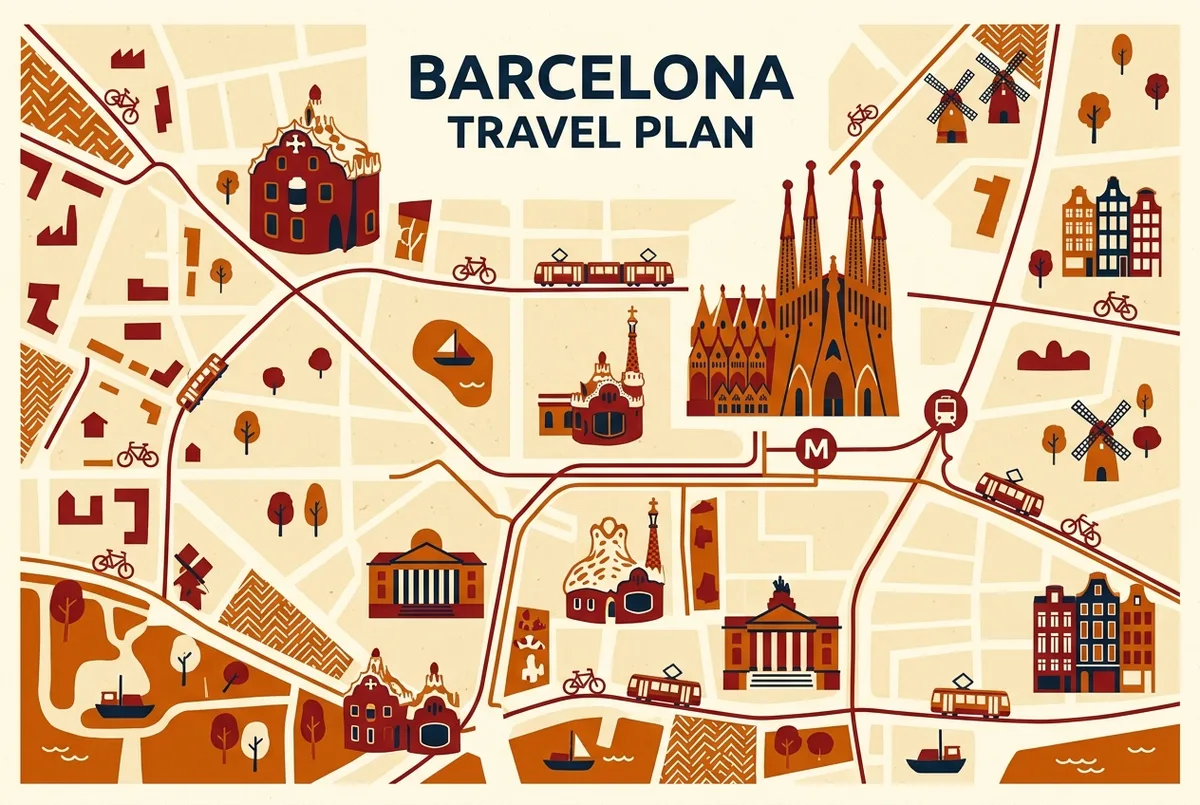
Pairing a Sagrada Familia ticket with another Gaudí site is a common way to build a full Barcelona day. Park Güell is the most popular pairing, followed by Casa Batlló, and both sit within easy metro reach of the basilica. Travelers with a bit more time sometimes add a full-day trip to Montserrat, the mountain monastery outside the city, or a wider tour covering several Gaudí houses in one outing.
Bundling sites can save time versus booking everything separately, though it is worth checking whether a combo actually saves money or just convenience. Our Sagrada Familia combo tickets guide lays out every common pairing, including realistic timing between stops so you do not end up rushing through either site.
Whichever ticket you choose, the same basic rule applies: book a specific date and time ahead of your visit, match the ticket type to how much of the building you want to see, and confirm your booking details the night before so entry day goes smoothly.